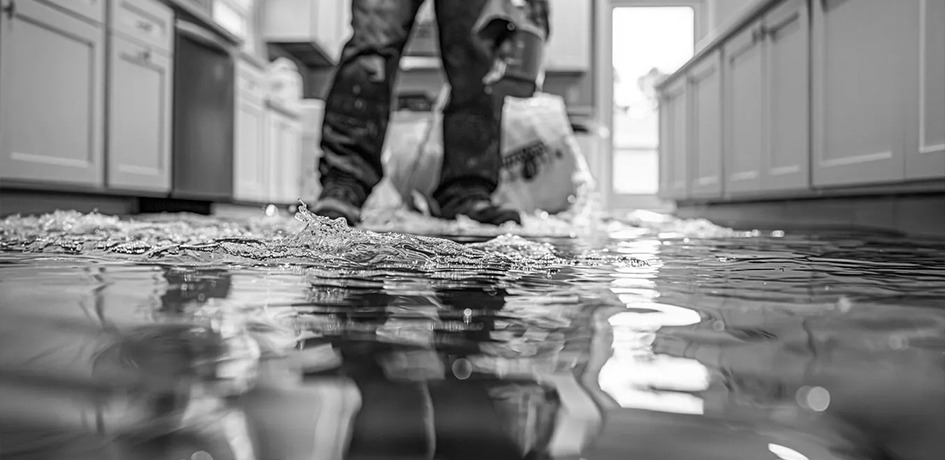
A basement flood in Toronto is a race against time. Whether it’s a burst pipe during a freezing January night or a flash flood from a summer thunderstorm, the immediate aftermath is chaotic. Most homeowners focus on the visible: pumping out standing water, drying the carpets, and throwing away soaked cardboard boxes.
However, at DKI Midtown, we’ve seen that the real danger isn’t what you see—it’s what stays behind. Even after a home looks “dry,” mould can be silently colonizing your living space.
Here is why Toronto homeowners often miss hidden mould after a flood and how you can protect your property.
The “Dry to the Touch” Fallacy
The biggest mistake homeowners make is assuming that if a wall feels dry, the danger is gone. Modern Toronto homes use high-efficiency insulation and drywall that act like a sponge. While the surface might dry due to airflow, the interstitial space (the gap between the drywall and the exterior studs) remains damp for weeks. This dark, stagnant environment is the perfect incubator for Stachybotrys chartarum (black mould).
The Concrete “Sweat” Factor
Many Toronto homes feature older concrete foundations. Concrete is porous. During a flood, water is absorbed deep into the foundation walls. As the home warms up, that moisture tries to escape, often getting trapped behind baseboards or vinyl flooring. This creates “hidden pockets” of moisture that you won’t notice until you smell a persistent musty odor.
Micro-Fissures in the Foundation
Toronto’s “freeze-thaw” cycle creates tiny cracks in foundations. During a flood, water is forced into these micro-fissures by hydrostatic pressure. Even if you dry the interior, moisture remains trapped inside the structure of the home itself, feeding mould growth from the inside out.
Overlooked Areas: HVAC and Insulation
If your furnace or AC was running during or after a flood, mould spores may have been pulled into your ductwork. Furthermore, blown-in cellulose insulation (common in GTA attics and crawlspaces) can hold moisture for an incredibly long time without showing visible stains on the ceiling below.
Why Professional Remediation is Essential
At DKI Midtown, we don’t just look at the surface. We use industrial-grade thermal imaging cameras and moisture meters to “see” through walls. Our team ensures that the structural drying process is complete, preventing the health risks and property devaluation that come with hidden mould.
Frequently Asked Questions (FAQs)
How long does it take for mould to start growing after a flood?
Mould can begin to colonize in as little as 24 to 48 hours after water exposure. This is why immediate professional extraction and dehumidification are critical.
Can I just use bleach to kill the mould I see?
We do not recommend this. Bleach often only kills the surface mould; the water in the bleach can actually soak into porous materials like drywall, providing more moisture for the mould roots (mycelium) to grow deeper.
What are the signs of hidden mould if I can’t see it?
The most common signs are a persistent “earthy” or musty smell, unexplained respiratory issues or allergies among residents, and peeling paint or bubbling wallpaper.
Will my insurance cover hidden mould removal?
In most cases, if the mould is a direct result of a “sudden and accidental” flood covered by your policy, remediation is included. However, if the mould is caused by long-term neglect or a slow leak, it may be denied. DKI Midtown works directly with insurance providers to help navigate your claim.
Worried about hidden mould in your Toronto home?
Don’t wait for the smell to start. Contact the experts at DKI Midtown today for a professional inspection.