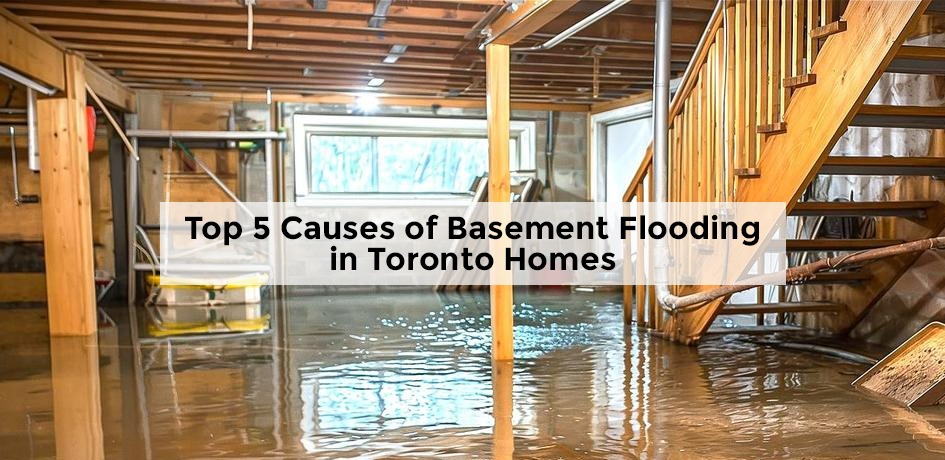
Understanding why basement flooding happens—and how to prevent it
Basement flooding is one of the most common and costly problems for homeowners in
Toronto, Ontario. Water in the basement can lead to structural damage, mold growth,
ruined possessions, and expensive repairs. In a city prone to intense rainstorms, snowmelt
and aging infrastructure, understanding the key causes of basement flooding is essential
for effective prevention and long-term home protection.
1. Heavy Rainfall, Stormwater and Snowmelt Overload
Toronto’s climate features heavy rainstorms and significant spring snowmelt events
that can overwhelm local drainage systems. When this happens:
- Stormwater accumulates faster than it can drain away.
- Saturated soil increases water pressure against basement walls.
- Water finds weak points in foundations and enters below grade.
This type of overland flooding—water flowing across the surface and into homes—is
especially common during intense rainfall or rapid snowmelt periods. Even homes that
have never flooded before can suddenly experience water intrusion when the ground is
fully saturated.
2. Poor Exterior Drainage and Lot Grading
Another major cause of basement flooding is inadequate yard drainage and improper land
grading around a home’s foundation:
- If the ground slopes toward the house, water pools near the foundation.
- Soil that holds water (like Toronto’s clay soil) increases pressure and seepage.
- Clogged or overflowing gutters and downspouts fail to move water away from the home.
Homes with negative grading—where the backyard or front slopes toward the structure—
are highly susceptible to water penetration through cracks or low window wells.
3. Foundation Cracks and Hydrostatic Pressure
Even small cracks in basement walls or floors can let water in—especially when
hydrostatic pressure builds up outside the foundation. Hydrostatic pressure is the force
that water in the soil exerts on basement walls as the water table rises. In Toronto and the
GTA:
- Clay-heavy soils hold moisture close to the foundation.
- Continuous moisture cycles intensify pressure against basement walls.
- Cracks grow over time, becoming entry points for water.
Without proper exterior waterproofing or protective membranes, these foundation
weaknesses become recurring sources of seepage and flooding.
4. Sump Pump or Weeping Tile Failures
Most Toronto homes rely on sump pumps and weeping tiles (foundation drains) to
remove excess water from around the basement. When these systems fail, basement
flooding is much more likely:
- Sump pump failure due to power outages, mechanical breakdowns or lack of
maintenance - Clogged, damaged or missing weeping tiles that can’t divert water away.
- Systems overwhelmed during big storms
A malfunctioning sump pump leaves groundwater with no escape, turning subtle moisture
problems into significant flooding very quickly. Regular maintenance and a reliable backup
system are key to prevention.
5. Sewer Backups and Blocked Lines
Toronto’s aging sewer infrastructure is a frequent factor in basement flooding, especially
during heavy rainfall:
- Municipal sewers can become overloaded and force wastewater back into homes.
- Blocked sewer lines—due to debris, sediment or overwhelmed systems—cause
water to reverse flow. - Basement drains and toilets can suddenly back up with sewage-contaminated
water.
This kind of flooding is especially serious because it introduces contaminated water,
posing health risks and requiring specialized cleanup. Installing a backwater valve can
help reduce this risk.
Conclusion: We Are Here for You
Basement flooding can be stressful and overwhelming. You don’t have to handle it alone.
If your home has experienced water damage, contact DKI Toronto Midtown for your
emergency restoration services. Our team responds quickly, works with care, and helps
restore your home safely and professionally.
We are here for you. Contact us today.